4FIT company · Software studio
Software built by people who think together.
4 Friends designs and builds custom software, web applications and cloud infrastructure — working closely with the people who will rely on it every day.

Shared problem solving
01Overview & approach
Good software starts with a well-understood problem.
We spend real time understanding how your business works, who the users are and where the friction is. That shared understanding drives every decision about scope, architecture and design.
From there we work in small, visible steps: frequent demos, honest trade-offs and code that is tested, documented and ready to be maintained — by us or by your own team.
02Core areas of expertise
- 01
Custom software
Systems shaped around your workflow rather than the other way round.
- 02
Web applications
Browser-based products, portals and dashboards for real daily use.
- 03
Cloud & infrastructure
Environments, pipelines and monitoring that keep software running.
- 04
UX/UI & product design
Research-informed interfaces that are clear before they are clever.
- 05
APIs & integrations
Connecting services, data sources and third-party platforms reliably.
- 06
Quality & support
Testing, maintenance and steady improvement after launch.

03Custom software development
Tools that fit the way you already work.
Off-the-shelf products rarely match a specific process. We build internal systems, automation and business applications around your real workflows, data and rules.
- Typical work
- Internal tools, workflow automation, data processing, admin systems.
- What you get
- Source code, documentation, tests and a deployment you control.
04 — Web application development
Fast, accessible web apps that people return to.
Customer portals, dashboards, booking and management systems, SaaS products. We focus on performance, accessibility and maintainable frontend and backend code.
- Responsive interfaces for desktop, tablet and mobile
- Secure authentication and role-based access
- Clean APIs and well-structured databases
- Measured performance and accessibility checks

05Cloud & infrastructure engineering
Infrastructure you can reason about.
We set up cloud environments, CI/CD pipelines, infrastructure as code, logging and monitoring — so releases are repeatable, costs are visible and problems are noticed early. We also help move existing applications to the cloud step by step.
06UX/UI & product design
Clarity first. Polish second.
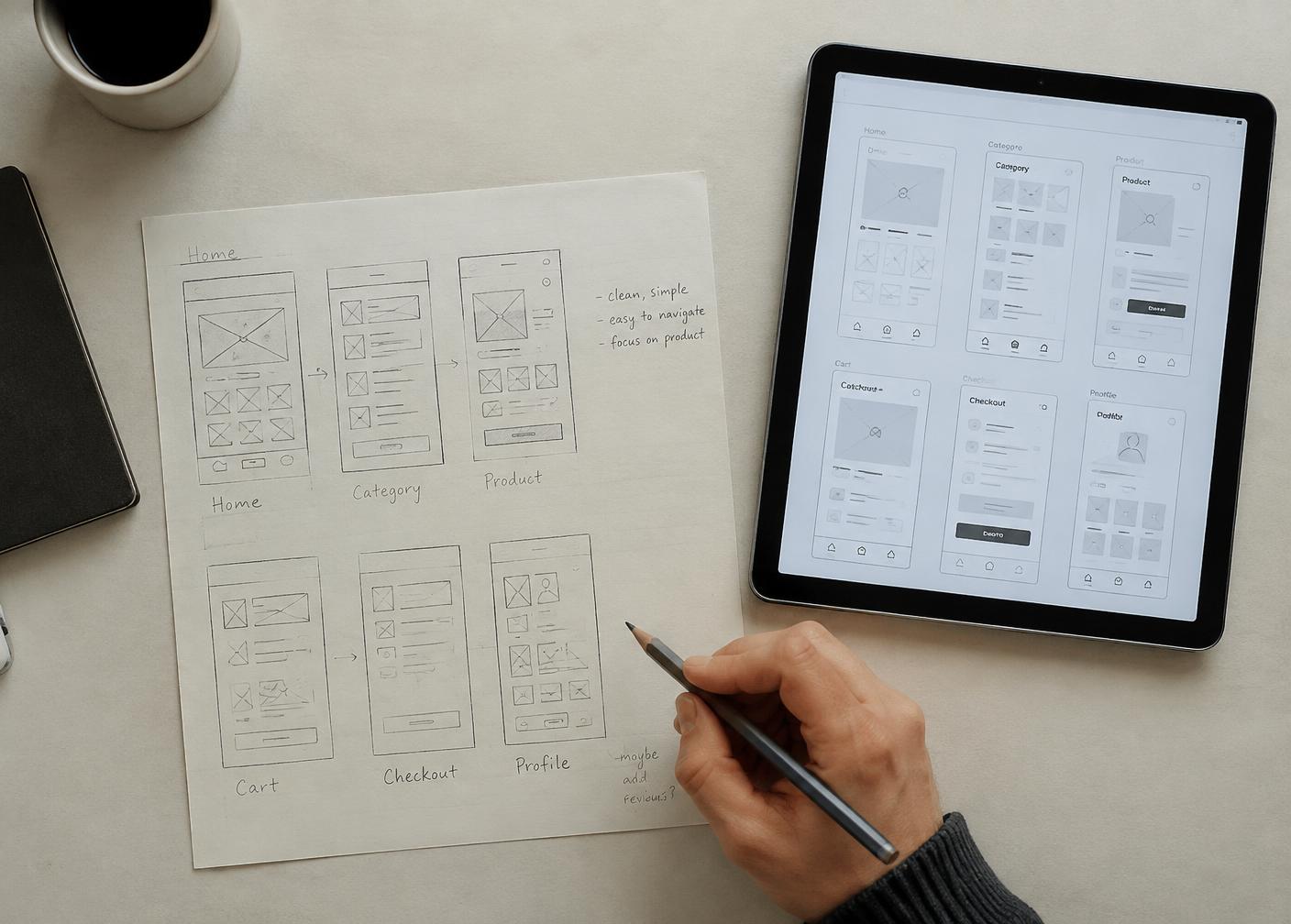
User research, flows, wireframes, interactive prototypes and visual design systems. Designers and engineers work side by side, so what is designed can actually be built.
07Working process
From discovery to delivery, in five stages.
Stage 1
Discovery
Goals, users, constraints and risks are mapped before anything is estimated.
Stage 2
Definition
Scope, priorities and architecture are written down and agreed.
Stage 3
Design
Flows and interfaces are prototyped and reviewed with you.
Stage 4
Build
Short iterations with working software you can see and test.
Stage 5
Delivery
Release, handover documentation and a plan for what comes next.
08Engineering quality & testing
Tested is part of done.
Automated tests
Unit, integration and end-to-end tests for the paths that matter most.
Code review
Every change is read by another engineer before it is merged.
Continuous integration
Builds, linting and tests run automatically on every change.
Readable code
Consistent conventions and documentation for whoever maintains it next.
09 — Security & responsible development
Protecting data is an engineering habit.
Security is considered at design time, not added at the end. We collect only the data a product needs and treat privacy as a requirement.
- [✓]least-privilege access to systems and data
- [✓]secrets kept out of source code
- [✓]dependencies tracked and updated
- [✓]input validation and safe data handling
- [✓]encryption in transit and at rest where appropriate
- [✓]backups and recovery plans that are tested
10Collaboration & communication
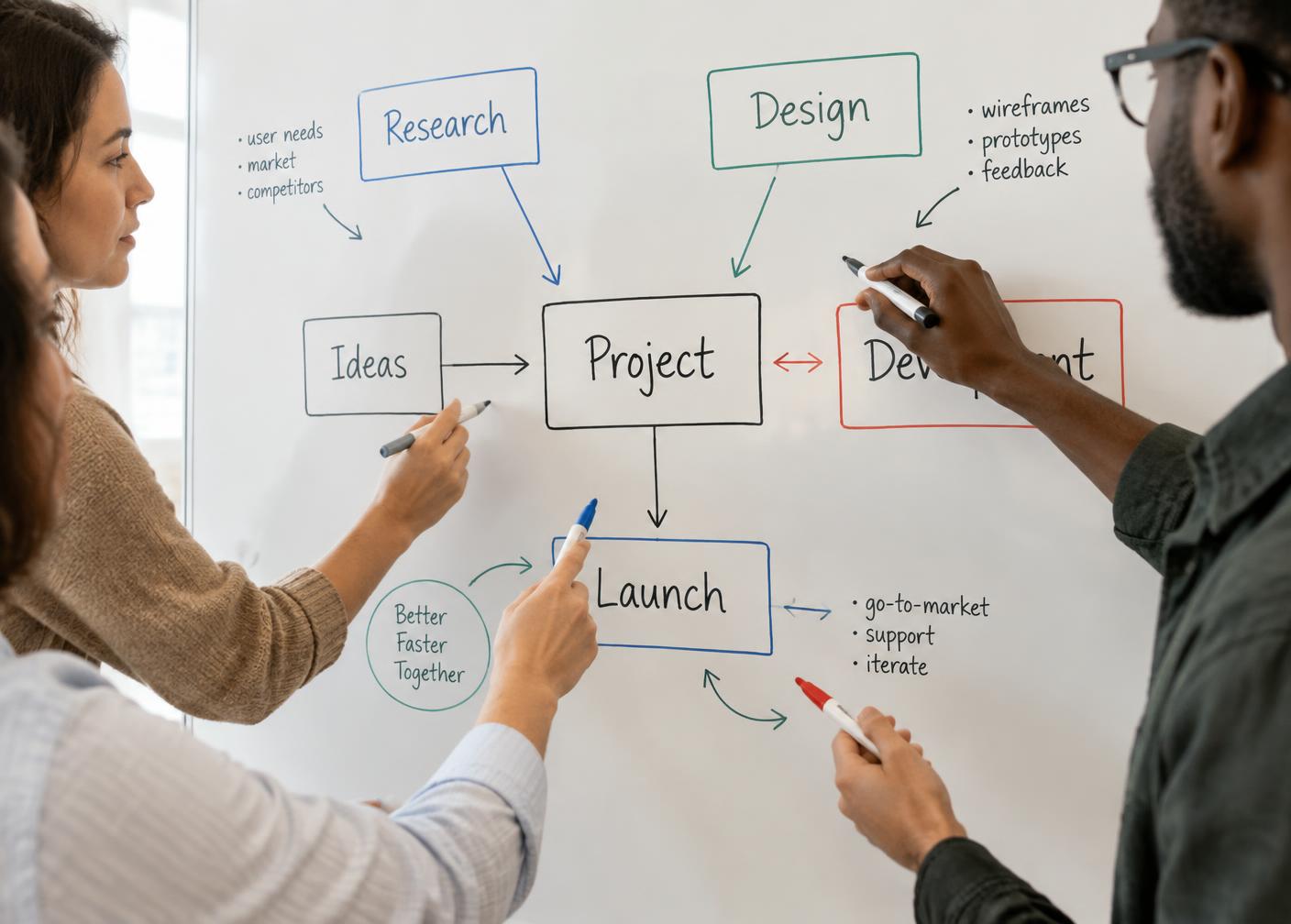
Work like a friend would: openly and reliably.
- 1
Say it early
Risks, delays and trade-offs are shared as soon as we see them.
- 2
Show, don't report
Regular demos of working software instead of status slides.
- 3
Plain language
Technical decisions explained in terms of impact on your business.
- 4
One shared picture
Written decisions and a single place for scope and priorities.
11Who we can support
Early-stage startupsSmall and medium businessesInternal operations teamsService companiesE-commerce and retailEducation and trainingLogistics and field workNonprofits and community projectsAgencies needing an engineering partner
Typical projects include MVPs, replacements for spreadsheets and manual processes, customer-facing portals, integrations between existing systems, and modernisation of older applications.
12FAQ
Questions, answered.
- What kinds of projects does 4 Friends take on?
- Custom software, web applications, APIs and integrations, cloud and DevOps work, UX/UI design, testing, and ongoing maintenance. Projects can start from an idea or from an existing system.
- Can you work on an existing codebase?
- Yes. We usually begin with a short review of the code, infrastructure and open issues so we can recommend whether to extend, refactor or replace specific parts.
- How is a project estimated?
- After discovery we describe scope in concrete deliverables and give an estimate based on that scope. When requirements are still uncertain, we suggest a smaller first phase to reduce the unknowns.
- Who owns the code we pay for?
- Ownership and licensing terms are agreed in the project contract before work begins, so they are clear from the start.
- Do you provide support after launch?
- Yes. Maintenance can include updates, monitoring, bug fixes and small improvements, arranged around what your product actually needs.
- How do we start?
- Send an email to ais0927804219@gmail.com describing what you want to build or improve. We reply with questions and a suggested next step.
13 — Contact
Have a project in mind? Tell us about it by email.
ais0927804219@gmail.com